

Major Reform – Goods and Service Tax Bill Introduced in India,

Recently, Government of India has passed the Goods and Service tax bill in India.
Taxes in India were collected in two forms i.e. State Government and Central Government. With this two taxation process, there will be an overlapping system in collecting the taxes and also their powers.
There are 2 types of taxes which are Central Board of Direct Taxes and Central Board of Excise and Customs, and these are constituted under Section 3 of the Central Boards of Revenue Act, 1963.
Direct Taxes
These are collected through Income Tax Department, but it also deals with the double Taxation avoidance agreements. It collects taxes from a normal small scale industry to large scale industries.

Excise and Customs
It comes with the category of Ministry of Finance, where deals with the formulation of policies and collection of customs and excise duties along with service taxes, helps in preventing smuggling, customs related issues.
Now let us have a look at State Taxes and Central Taxes on which they collect.
States Taxes
They collect Value Added Tax (VAT), which is the major source for Indian States Revenue. They collect VAT from Super Markets, Restaurants, Hotels, Gold Shops and many other retail businesses. Indian States Revenue is totally dependent on these VAT services.
Central Taxes
Central Taxes comes under the services such as Imports and Exports, Construction Services, Software, Intellectual Property Services, Trade and service Transactions.
Goods and Service Tax Bill
Goods and Service Tax Bill is the one which proposes Value Added Tax, implemented in India from April 1st, 2017. To overcome the double taxation, Goods and Service Tax Bill, which is also known as, The Constitution Bill, provided a resolution theory.
It considers the right to use goods, work on others goods, making available job for non-commercial use of business, right to use any goods for any purpose, and all these changes were manifested in the Goods and Service Tax Bill, and it can’t be changed normally.
In Excise and Customs Services, Software is also considered as a service tax provider, but what it is actually a good or a service? Here, the actually theme is software is transferred in the form of CD, which is not exactly importing CDs, but it just delivering software, that is stored in CD/DVD. That CD/ DVD is then supplied to the customers. Hence, it is a service not a good.
ARTICLE 366(29A)
After remodelling the rules in Article 366 (29A) by the Goods and Services Tax Bill, the following are included in the purchase or sale of goods,
- Tax on the property, pursuance of a contract.
- Tax on transfer of property.
- Tax on delivery of goods, payment by installments.
- Tax for using the right on any goods to use for any purpose.
- Tax on supply, or any service, or any consumption of human either food or drink, on cash, or ornaments etc., It considers every place, thing, item that a human purchases or consumes is considered under tax schemes.
The Constitution has taken a huge change on the double taxation with the only aim of ensuring the taxpayers to claim their benefits for paying taxes in correct time which are provided by the Goods and Services Tax Bill (GST).
 Sales Tax For E-Commerce: 3 Things Small Businesses Should Know
 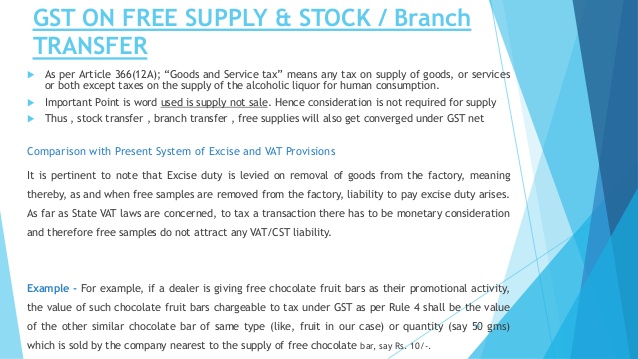 What Is The GST Liability on Free Supply of Goods and Services?
  Some FAQs about GST- Understanding Scope and Provisions of GST
  Understanding the Reverse Charge mechanism under GST and IGST?
  Pros and Cons of GST- Is Ushering in of GST worth Celebrating as media wants us to believe?
  Arrests and Detention Provisions under GST in Detail- Are these justified
  ITAT Amritsar: No Section 269SS Violation for One-Time Cash Payment Before Sub-Registrar
 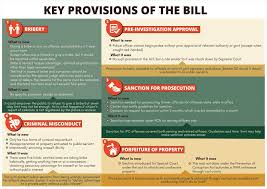 Tax Officials Unleash Digital Dragnet: How New Raid Powers Redefine Privacy, Property Rights in India and likely to Fuel Corruption
  Income Tax Department Rewards for Reporting Tax Evasion: A Comprehensive Guide
  Forfeiture of Gratuity by Employer- What are the Remedies for an employee- Can employer be challenged?