

What will be the implications of GST over Inter-State Transactions?

GST and Interstate Trade
Understanding GST’s role in Inter-State Trade
As per the Integrated Goods and Services Tax (IGST) law, IGST would mean that the tax which is levied under this act on the movement of goods and services during inter-state transactions. IGST will be applicable with the same effect throughout the country.
As per the Task Force on GST,13th Finance commission(2009) report, a recommendation was made that when implementing the IGST model there is a need for a robust IT infrastructure for enabling total information with respect to inter-state transactions. The Task Force as advised that if the IT infrastructure and the information support systems are not made available in due time, the implementation of IGST model will remain at a conceptual stage.
IGST shall be levied on each and every inter-state transaction with respect to goods and services which are taxable with proper provisions for stock transfer or consignment of goods and services. In the case of an inter-state sale, the seller has to pay IGST on value addition, while he will be allowed to adjust the credit of IGST, SGST and CGST available to him on his purchases. The exporting state has to transfer to the central government the credit of IGST when setting the output tax liability in his state. The center will then transfer the credit of IGST which is used in payment of SGST to the importing state.
The authorized committee has viewed and welcomed the recommendation for adopting IGST model for the purpose of taxation for interstate movements of taxable goods and services. All the related information has to be submitted to a central agency that would perform a clearing house function confirm the claims and notify the state government with regard to transfer the funds.
Under the IGST model, a dealer can have depots with goods at different locations in the country and he can dispense goods from those locations to nearby states. This model would provide a cost effective delivery mechanism for the assesses.
All the inter-state adjustment shall be done by this clearing agency and concern of assesses will not be entertained for any such adjustments.
The apportionment of revenue from IGST between states and the union shall be done by parliament as per the recommendation of goods and service tax council.
Benefits of IGST Model:
- It is a self-monitoring tax regime
- The seller does not have to pay any taxes upfront and hence there is no blockage of funds
- Reduced paperwork as most of the dealers will be online registered and all the correspondence with them will be via e-mail
 Sales Tax For E-Commerce: 3 Things Small Businesses Should Know
 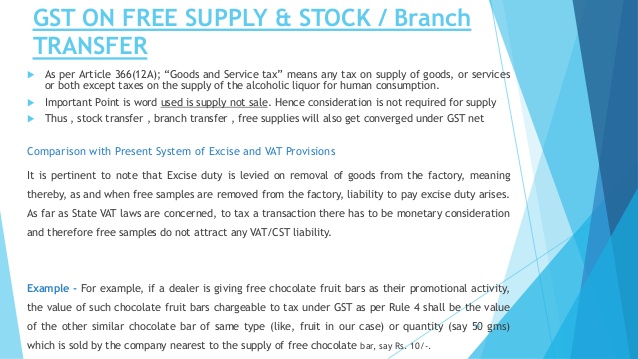 What Is The GST Liability on Free Supply of Goods and Services?
  Some FAQs about GST- Understanding Scope and Provisions of GST
  Understanding the Reverse Charge mechanism under GST and IGST?
  Pros and Cons of GST- Is Ushering in of GST worth Celebrating as media wants us to believe?
  Arrests and Detention Provisions under GST in Detail- Are these justified
  ITAT Amritsar: No Section 269SS Violation for One-Time Cash Payment Before Sub-Registrar
  Tax Officials Unleash Digital Dragnet: How New Raid Powers Redefine Privacy, Property Rights in India and likely to Fuel Corruption
  Income Tax Department Rewards for Reporting Tax Evasion: A Comprehensive Guide
  Forfeiture of Gratuity by Employer- What are the Remedies for an employee- Can employer be challenged?